I Didn t Do It Must Have Been Review
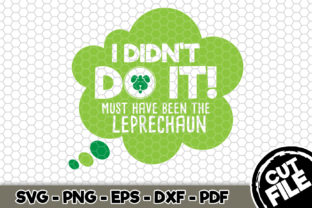
As a designer who spends half my life in front of an embroidery machine and the other half tweaking files for clients, I don’t just look at a design; I look at how it will behave under the needle. When I first pulled up I Didn t Do It Must Have Been, labeled as a Craft File featuring a St. Patrick’s Day theme, my immediate thought wasn’t about the holiday itself—it was about the narrative. This isn’t just text; it’s a personality piece. The quote, "I Didn t Do It Must Have Been The Leprechaun," paired with the implied dog bandana context, suggests a playful, slightly chaotic energy that is perfect for today’s handmade market. But does it translate well from screen to fabric? Let’s break down what this embroidery project actually offers for your studio or small business.
The First Impression: Mood and Visual Personality
From a graphic design standpoint, I Didn t Do It Must Have Been strikes a balance between humor and charm. It feels like something you’d see on a viral social media post, which is exactly why it has potential for high engagement. The layout appears to be centered around a statement, likely accompanied by whimsical elements typical of St. Patrick’s Day graphics—think shamrocks, perhaps a subtle paw print, or a playful font choice that mimics handwriting or comic sans-adjacent styles. For an embroidery file, the challenge with quotes is always legibility. If the lettering is too thin or the curves too sharp, the final finished product can look muddy. However, given its categorization as a Graphics asset often used in paper crafting programs like Cricut Explore or Silhouette, we can assume the vector lines are clean. When digitized or imported correctly, these clean lines usually translate into crisp satin stitches or precise fill stitches, provided the digitizer respected the original intent.
The mood is undeniably festive but lighthearted. It doesn’t take itself seriously, which is a huge selling point for consumers looking for personalized gifts. It’s not trying to be elegant; it’s trying to be fun. That distinction matters because it sets expectations for the customer. They aren’t buying a formal accessory; they are buying a laugh.
Real-World Application: Where This Design Shines
I’ve tested similar quote-based designs across various mediums, and I Didn t Do It Must Have Been finds its natural home in casual, everyday items. Here is where I would strategically place this design to maximize its appeal:
- Dog Bandanas and Pet Accessories: As the description hints, this is a prime candidate for pet gear. A dog wearing a bandana that says the leprechaun did it is an instant conversation starter. This fits perfectly into the growing niche of custom apparel for pets.
- Holiday Tote Bags: Imagine a canvas tote bag embroidered with this quote for a St. Patrick’s Day gift set. It’s practical, reusable, and carries a joke that travels with the user. This is excellent for Etsy seller listings during the March rush.
- Kitchen Towels and Aprons: For the home cook who loves a bit of mischief, this design works beautifully on linen or cotton tea towels. It adds a touch of personality to the kitchen without being overwhelming.
- Baby and Nursery Items: While the "leprechaun" theme is adult-oriented humor, the aesthetic can often be softened for baby onesies or burp cloths. Parents love funny messages for their little ones, and this could serve as a humorous personalized gift for a baby shower.
- Sweatshirt Embroidery: For those colder spring evenings, a cropped hoodie or sweatshirt featuring this design offers comfort and style. It’s a staple item for small shop product catalogs.
In each of these scenarios, the design acts as a focal point. It draws the eye and invites a smile. For a craft business, items that provoke a reaction tend to sell faster because they are shareable. A customer taking a photo of their dog in the bandana is essentially doing your marketing for you.
Technical Considerations and Potential Pitfalls
No design is flawless, and as a reviewer, I need to highlight where I Didn t Do It Must Have Been might require extra caution. Embroidery is a physical medium, and digital perfection doesn’t always guarantee stitching success.
First, consider the hoop size. If the design includes intricate details or very small lettering, ensure your hoop is large enough to accommodate the entire graphic without cutting off edges. Small details are the enemy of clarity in embroidery; if the text is too condensed, it may blur together, especially on textured fabrics. Always test the design on scrap fabric first to check thread color contrast. On dark fabrics, you’ll need a heavy backing or specific thread colors to ensure the white or light-colored elements pop. Conversely, on light fabrics, ensure there is enough density to prevent the fabric texture from showing through the stitches.
Another critical factor is the stitch density. Quote designs often rely on satin stitches for outlines or text. If the density is too low, the stitching will look sparse and cheap. If it’s too high, the fabric may pucker, especially on stretchy materials like jersey knit. This is particularly relevant if you plan to embroider this on cap brims or curved surfaces like pillow covers. Curved surfaces require careful hooping and potentially a different stabilizer approach to maintain the integrity of the design shape.
Also, think about the fabric texture. A rough burlap tote bag might snag fine threads, while a smooth cotton canvas will render the design sharply. For embroidered patch applications, ensure the design has a clean edge or a sufficient border so that when cut out, the stitches don’t fray. If the design relies on delicate running stitch accents, verify that these won’t get caught on zippers or buttons if placed near garment closures.
Quality Control Checklist for Sellers
- Stabilizer Selection: Use the correct stabilizer for your fabric weight. Tear-away for wovens, cut-away for knits and stretchy items.
- Thread Quality: High-quality polyester thread resists fading and fraying better than rayon or cotton, ensuring your commercial embroidery pieces last.
- Mockup Testing: Before committing to production, create a printable mockup or run a test stitch on black and white to evaluate contrast and balance.
- Licensing Verification: Since this is a digital embroidery file or craft asset, double-check the license terms. Can you sell finished items? Is there a limit on units? Clarifying this protects your brand consistency and legal standing.
Final Verdict: A Strong Asset for Seasonal Sales
I Didn t Do It Must Have Been is more than just a St. Patrick’s Day novelty; it’s a versatile design element that speaks to the modern crafter’s desire for humor and personalization. Its strength lies in its relatability. Whether applied to a tote bag design for a festival, a baby embroidery piece for a new parent, or a sweatshirt embroidery for a cozy night in, it delivers value through entertainment.
For design assets in your library, this one earns its keep by offering a quick turnaround option for seasonal trends. It doesn’t require complex digitizing work if imported correctly, allowing you to focus on marketing and presentation. Just remember to respect the technical limitations of embroidery. Test thoroughly, choose your fabrics wisely, and present the finished product with pride. When done right, this design won’t just sit on a shelf; it will go home with a customer who is smiling every time they use it.
If you are looking to expand your craft business offerings with items that have broad appeal and low barrier-to-entry, this machine embroidery design is a smart addition. It’s playful, professional, and ready to stitch. Just make sure to inspect the small details and confirm the hoop size compatibility before you start your production run. Happy stitching!